Roundtable: “Resetting Enlargement: A New Approach towards the Western Balkans”Belgrade Security Conference 2025 | 19 November

Key Takeaways

  • The current enlargement model is too slow for today’s geopolitical realities, making faster, results-driven EU steps essential.
  • The Growth Plan offers tools for gradual or accelerated integration, but its link to the accession process remains unclear, risking further reform fatigue in the region.
  • The financial gap between pre-accession support and post-accession EU funding highlights the transformative impact of full membership; the Western Balkans should be seen as a strategic investment, not a cost.
  • Enlargement today functions primarily as a security project, yet limited public understanding of its economic benefits and a decade of perceived EU containment undermine reform momentum.
  • Post-accession monitoring is acceptable, but anything less than full membership or restricted voting rights would be unjust once obligations are met.

Panel Highlights

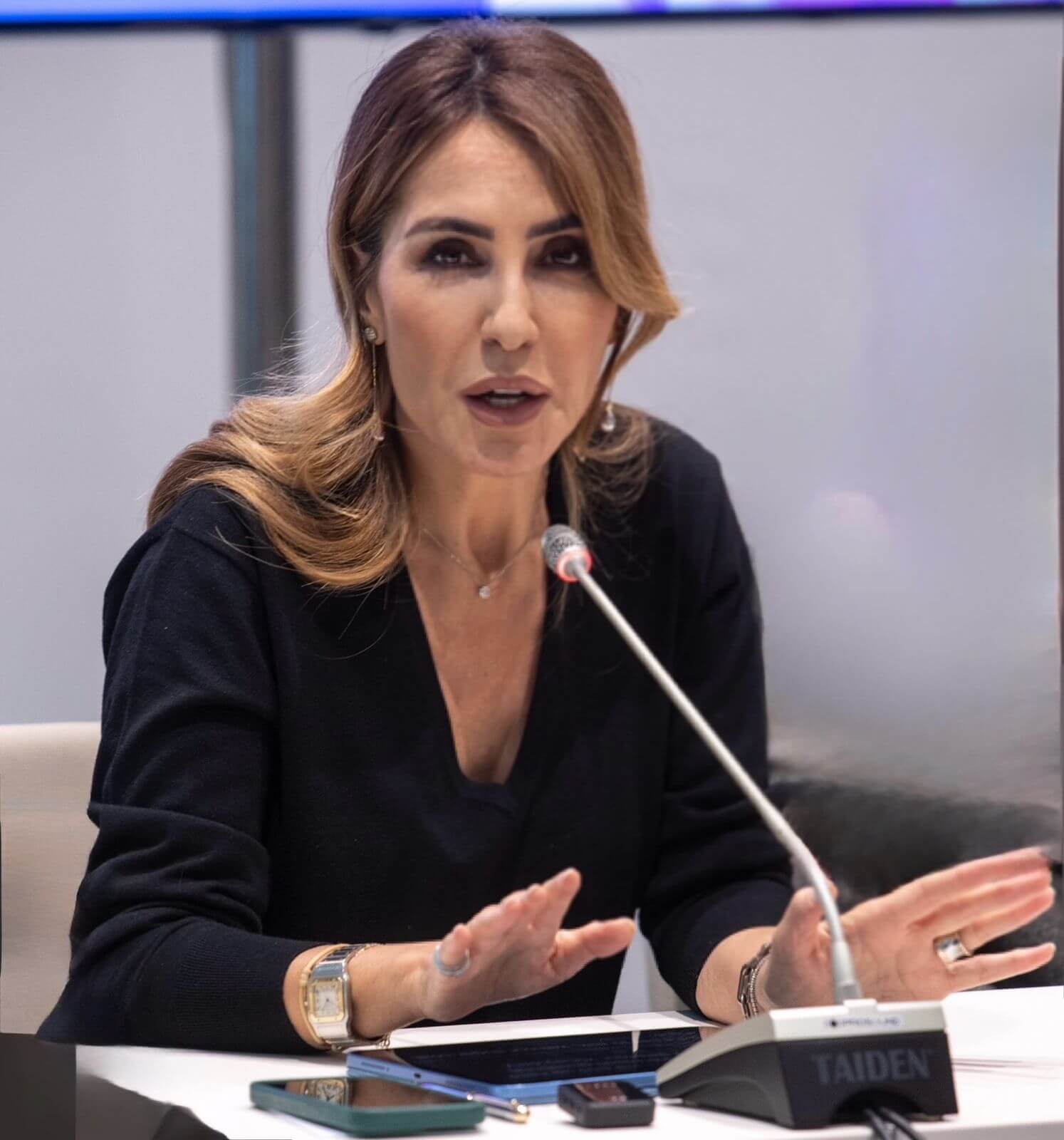
The roundtable, moderated by Majlinda Bregu, Strategic Committee at Europe Plus (E+), brought together leading experts:

  • Tanja Miščević, Professor at the University of Belgrade and former Minister for European Integration, highlighted that the traditional enlargement model is too slow for today’s geopolitical realities. While the EU pursues measures delivering quick, tangible results—including gradual or accelerated integration and the Growth Plan—enlargement fatigue in the EU has generated reform fatigue in the region, making it crucial to accelerate reforms and link them clearly to full membership.
  • Fatmir Besimi, Founder and CEO of Strategers and former Minister of Finance of North Macedonia, emphasized that Western Balkan membership should not be seen as a cost. Comparing IPA funds (€150 per capita) with structural and cohesion funds in new member states (~€3,000 per capita), he underscored the transformative impact of full EU accession and stressed that the region represents a strategic and economic asset.
  • Agon Maliqi, Nonresident Senior Fellow at the Atlantic Council, framed EU enlargement primarily as a security project, emphasizing that security dynamics in the Western Balkans and Europe have shifted since Russia’s invasion of Ukraine, reinforcing the strategic importance of integration. Maliqi also noted that after a decade of EU skepticism, a new window of opportunity has emerged, yet domestic awareness of the economic benefits of accession remains limited, emphasizing the need for stronger engagement with reform-oriented actors.
  • Biljana Papović, State Secretary at the Ministry of European Affairs of Montenegro, showcased Montenegro’s progress, highlighting that enlargement retains transformative power and delivers tangible benefits. Alignment with EU standards requires sustained member state support, and while post-accession monitoring is acceptable, anything less than full membership would be unjust once obligations are met.

The discussion reinforced that the credibility of the enlargement process depends on aligning political commitment, financial resources, and consistent reform delivery. Ensuring measurable progress is key to sustaining trust and advancing the Western Balkans on their European integration path. The roundtable reaffirmed Europe Plus (E+)’s commitment to promoting a credible, forward-looking enlargement agenda for the region.
Recent Posts

Dr. Xhon Skënderi is a legal expert specialising in EU integration, rule of law and cross-border legal frameworks, with over a decade of experience in legal reform and EU acquis alignment. He holds a Doctor of Laws (Dr. iur.) from the University of Passau, Germany, with a focus on European Private International Law, comparative law and European legal systems. He has extensive experience advising public institutions and international organisations on the approximation, implementation and enforcement of EU legislation, including legislative drafting, compliance assessments and institutional coordination. His work spans EU-funded and regional assignments across the Western Balkans, with a particular focus on judicial cooperation in civil and commercial matters, regulatory alignment and evidence-based policy development. Dr. Skënderi is the author of numerous academic publications and policy studies in the fields of European law, cross-border dispute resolution and legal harmonisation, contributing to both scholarly debate and policy practice. Alongside his advisory work, he is an attorney and lecturer, combining academic excellence with practical legal expertise across civil and commercial law.
Ms. Donika Kamberi is a scholar of international law and global politics and currently serves as the Director of the Center for Peace and Transcultural Communication at the University of Tetova. She holds a Master’s degree in Global Politics and International Relations from the University of Macerata, Italy, and is pursuing a PhD in International Law at the South East European University. Her research focuses on peacebuilding, intercultural dialogue, international security, and the Western Balkans, with a strong emphasis on the EU’s role in regional stability and recent studies concerning the Russia–Ukraine war and the protection of civilians under international humanitarian law. Donika has published widely in international journals, participated in global conferences, and represents North Macedonia in international youth and leadership programs. She remains committed to advancing democratic values, conflict resolution, and meaningful cross-cultural cooperation. As Director of the Center since 2021, she has led initiatives promoting peace, dialogue, and cross-cultural understanding through research, conferences, and international cooperation. Kamberi has published widely in journals such as FREEDOM and JUSTICIA, contributed to translation projects, and participated in numerous international conferences and leadership programs, including the ACYPL Exchange Program sponsored by the U.S. Embassy. Her experience with NGOs and multicultural environments has strengthened her commitment to human rights and youth engagement, and she is recognized for her active involvement in academic, civic, and intercultural initiatives.
Dr. Enkeleida Tahiraj is an academic and consultant. She has taught Social Policy, Politics and Sociology at the University of Tirana; University of York; LSE, and UCL where she also directed a research program, was World Visiting Scholar at University of California San Diego and at Penn State University, USA, and Chevening Scholar at Sussex University, UK. She has presented at numerous academic conferences at Oxford, Harvard, UCL, LSE, Urbino-Italy, Petersburg State University-Russia, L-Università ta-Malta, and at policy impact events at FCO, ETF and Wilton Park.  Dr Tahiraj has advised international organizations including the European Commission, EUROFOUND, the UNDP, UNICEF, UN Women and the World Bank, the EU Mutual Information System on Social Protection (MISSOC), evaluated scientific programs for the Portuguese Foundation of Science and Technology, was special Adviser to IDS on WB Growth and Poverty Reduction as well as for national governments reforms. Dr Tahiraj's fields of research are EU Accession and Policy Transfer, Social Inclusion and Democratic Consolidation, Human Rights, Social protection rights-based policies Children, Gender & Family Policies, Social Security, Labour Markets and Employment, CSOs, Universal Basic Income and Policy Innovations.
Dr. Majlinda Bregu, is a policy leader, academic, and former politician with over two decades of experience in European integration, regional cooperation, and governance reform across South-East Europe. She currently serves as a Commissioner of the Pan- European Commission on Climate and Health (WHO).  From 2019 to 2024, Ms. Bregu served as Secretary General of the Regional Cooperation Council, where she led flagship regional initiatives such as the Common Regional Market, the Green Agenda for the Western Balkans, and the SEE2030 Strategy – strengthening the region’s alignment with EU standards and advancing cooperation under the Berlin Process. Previously, she served as Minister of European Integration and Government Spokeswoman of Albania (2007–2013), and as a Member of the Albanian Parliament (2005–2017), where she chaired both the European Integration Committee and the National Council for European Integration. A sociologist by training, Ms. Bregu has lectured widely at international universities and authored numerous publications on EU integration, governance, gender equality, and social development. Her leadership and commitment to regional cooperation and European integration have been recognized with several distinctions, including the Prespa Dialogue Award (2023) and the European Western Balkans Award (2021).