People rarely stay in waiting rooms longer than they have to. Waiting rooms are designed as temporary spaces places of pause, not permanence. They come with an implicit promise that something will happen next: a meeting will begin, a decision will be made, a door will open. When that promise is delayed for too long, people grow restless. They check the time, question the process, or eventually decide to leave. Waiting, by its nature, is meant to be short-lived…
I was born in 1996 in Macedonia, into a reality already shaped by expectation. The European Union was never framed as a distant aspiration or an uncertain possibility, but as something inevitably within reach, always just beyond the next reform, the next agreement, the next political shift.
Growing up, it often felt as if we were not steadily approaching a goal, but rather inhabiting a permanent waiting room, where time was measured in stalled negotiations, repeated setbacks, and conditional promises that were always present but never fully resolved. Departure from this in-between space was always assumed, yet never truly arrived.
I belong to a generation raised with the conviction that EU accession was not a matter of “if,” but “when.” That expectation has quietly shaped how we think, how we plan, and even how we define belonging. And yet, as the years pass, the endpoint once imagined as certain feels increasingly distant, almost abstract, as if it exists more as an idea than a place we are actively moving toward.
North Macedonia’s path toward the European Union reflects the broader complexities of enlargement in the Western Balkans. Once considered a frontrunner, the country became a candidate as early as 2005, followed by a recommendation to open negotiations in 2009. What followed, however, was not momentum, but interruption.
A decade-long blockade by Greece over the name dispute halted progress until the Prespa Agreement seemingly unlocked the process. But the breakthrough proved fragile. New obstacles emerged first through calls within the European Union to revise the accession methodology, and then through a veto by Bulgaria rooted in disputes over identity, language, and history.
The so-called French proposal of 2022 offered a way forward, but at a cost: progress became conditional once again, this time tied to constitutional changes and deeply sensitive political questions. Negotiations formally began, but uncertainty remained embedded in the process itself.
For my generation, this trajectory has created a paradox. We were raised to believe in a linear path toward the EU, yet we have experienced anything but linearity. Progress has not depended solely on reforms or readiness, but on shifting political conditions quite often beyond our control.
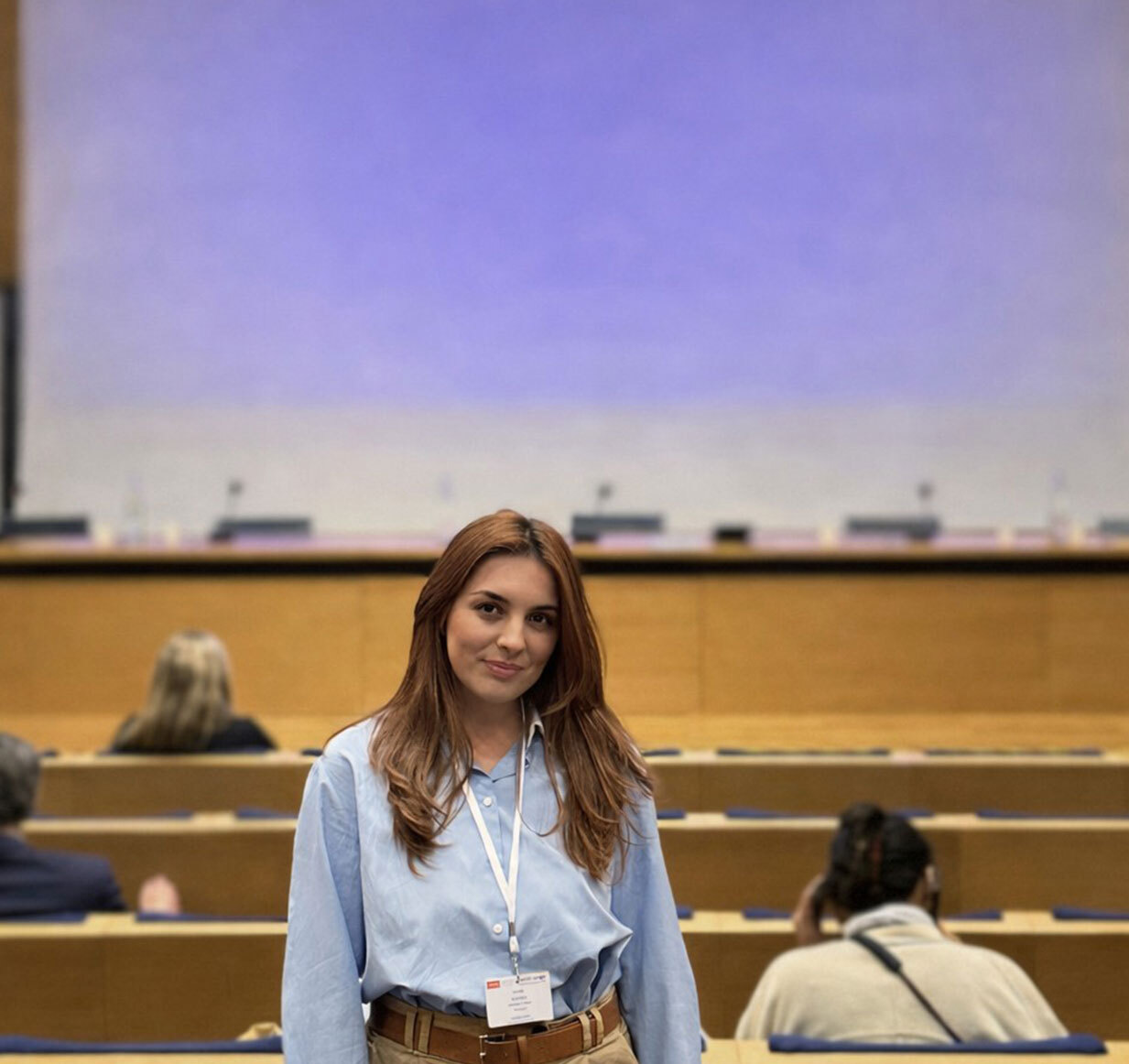
At a recent training in Tirana, organised under the REPACT initiative, the focus was not on accession as a distant milestone, but on integration as something that can and should happen step by step. The discussion moved away from promises and toward performance: can our institutions function as part of the EU Single Market even before membership?
This reframing is uncomfortable, but necessary.
Because it exposes a deeper truth: the challenge is no longer just external. It is internal. We have strategies, frameworks, and commitments. What remains uncertain is whether we can implement them consistently, coordinate effectively, and deliver results that go beyond formal compliance.
Initiatives like the Common Regional Market are no longer just preparatory exercises. They are testing grounds. Not for our ability to negotiate, but for our ability to function.
For too long, the narrative in North Macedonia has been one of waiting—waiting for decisions, waiting for recognition, waiting for the next political breakthrough. Gradual integration shifts that logic. It replaces waiting with testing and perhaps this is the most difficult shift of all.
Because it removes the comfort of external blame. It asks whether, despite the obstacles, we are already capable of acting as part of the Union we aspire to join.
In the end, EU accession may remain a political decision. But integration, increasingly, is becoming a functional one. And that is something we can no longer afford to postpone.
And yet, there was a quieter realization that stayed with me after Tirana.
Among participants from across the region and beyond, what became visible was not just diversity of experience, but a shifting sense of position. Countries that once entered the process later now speak with clarity about implementation, delivery, and next steps. Meanwhile, coming from a country that was once considered a frontrunner, I found myself reflecting on a more uncomfortable question: how did we start so early, and still feel as though we are catching up?
This is not simply about timelines or political obstacles. It is about what prolonged uncertainty does over time. It slows institutions, but it also reshapes expectations. It creates a habit of waiting, of adjusting to delay, of measuring progress in small procedural steps rather than tangible outcomes.
And perhaps this is the deepest challenge we face.
Because in a room where integration is increasingly discussed as something to be practiced and not postponed, the real gap is no longer just between member states and candidates. It is between those who have begun to act as part of the system, and those still conditioned to wait for it.
For a country that once stood at the front, realizing that you may no longer feel there is not just a political observation. It is a moment of reckoning and what comes after that realization may matter more than any negotiation framework.
Perhaps the hardest realization is that the waiting room was never just a temporary stage before arrival. As Timothy Garton Ash suggests in Homelands: A Personal History of Europe, Europe itself has always been a space of unfinished journeys. But for those of us still outside its formal boundaries, the challenge is different: to ensure that this condition of waiting does not become permanent, and that “arrival” remains something more than an endlessly deferred idea.